Why Zweko is the right partner for visors and ballistic glazing in defense and security

Image 1

Why Zweko is the right partner for visors and ballistic glazing in defense and security
In defense and security, protection and visibility are crucial. Soldiers, police officers, and security personnel rely on equipment that keeps them safe while ensuring a clear field of vision in every situation. That’s why leading defense organizations trust Zweko for advanced visors and ballistic glazing solutions.
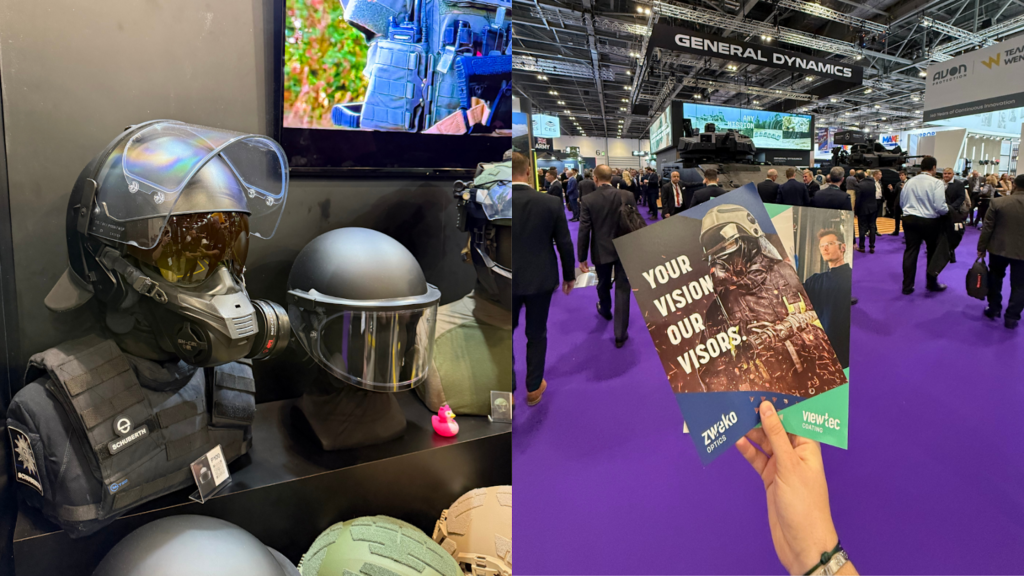
Image 4

Did you know: Zweko Optics was present at the DSEI exhibition in London this year? This is one of the world’s most prestigious events for defense and security. We not only gained insights into the latest innovations in our industry, but also held discussions with laminators of ballistic glazing and helmet manufacturers about the integration of our visors. These constructive conversations led to promising collaboration opportunities and the further development of customized solutions for defense applications.

High-performance visors: protection meets clarity

A visor should never force you to choose between safety and performance. Zweko visors are designed to provide:

  • Superior impact resistance against threats and flying debris.
  • Optical clarity with scratch-resistant and/or anti-fog coatings that ensure visibility in dust, rain, and extreme temperatures.
  • Comfort and usability, allowing operators to stay fully focused on the mission without distraction.

From combat helmets to face protection for special forces units, Zweko visors stand for unmatched reliability in the field.
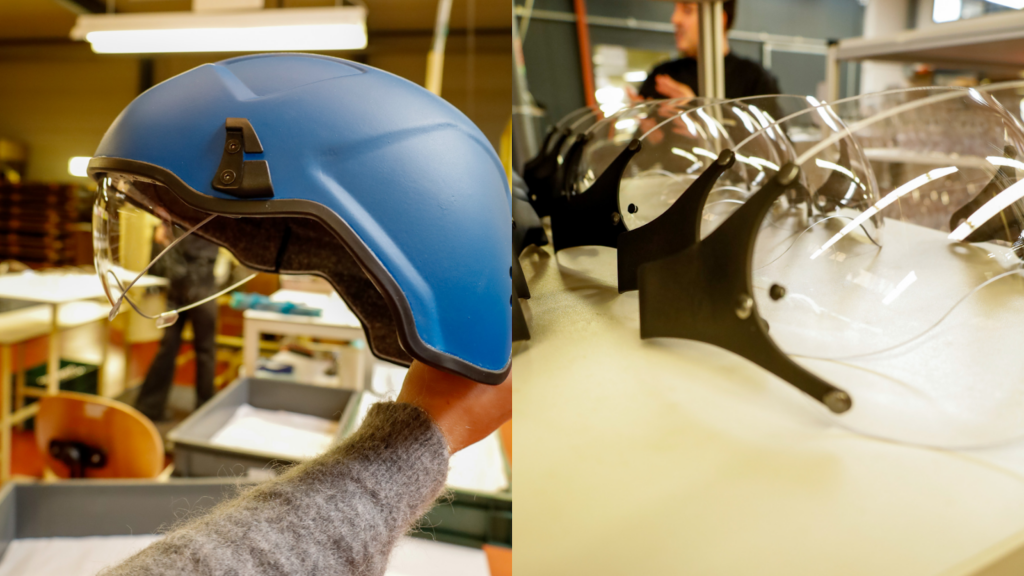
Image 3

Did you know: At Zweko Optics we recently developed two new innovative visors? First, we created visors for a safety helmet that slide seamlessly into the helmet rather than being mounted on top (left). On the right, we developed visors for aircraft carrier crew helmets, featuring a high-quality scratch-resistant and anti-fog pinlock insert.

Ballistic and safety glazing for vehicles and infrastructure

In armored vehicles, guard posts, and critical facilities, glazing is often the first line of defense. Zweko’s ballistic and safety glazing is engineered to:

  • Withstand ballistic impacts without compromising structural integrity.
  • Ensure clear visibility for rapid and accurate decision-making.
  • Increase durability with advanced protective ViewTec coatings.

Our coated polycarbonate sheets provide operators with both protection and confidence, supporting mission success without compromising situational awareness.
Image

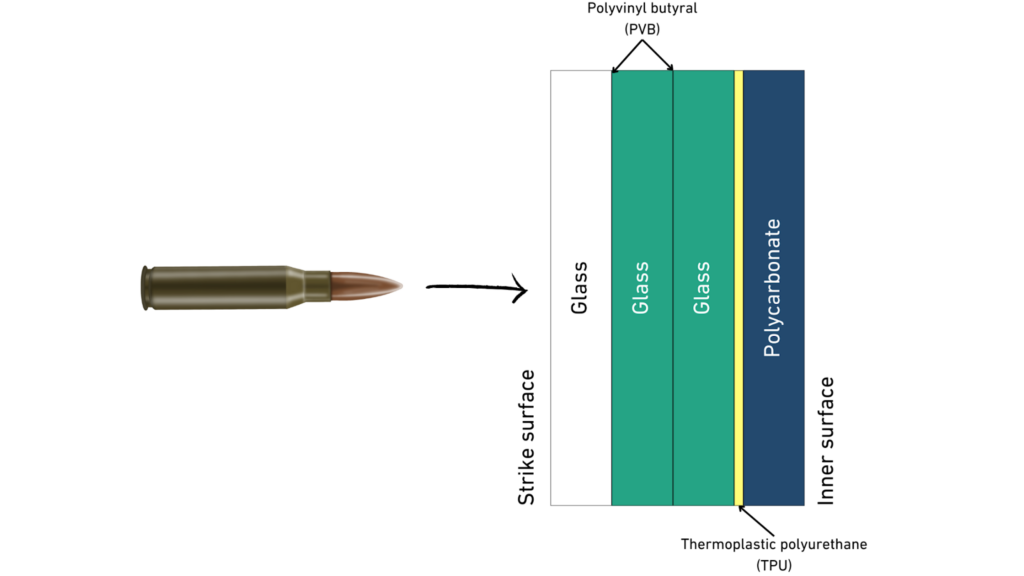
Did you know: At Zweko Optics we developed an in-house coating that scores nearly perfect on ballistic performance? It’s called ViewTec AGR abrasion resistant coating. This coating delivered outstanding results in multiple tests. Read more about it here.

Tailored solutions for every mission

Every mission comes with unique challenges. That’s why Zweko works closely with defense and security organizations to develop customized visors and glazing, from mobile armored units to static protection systems. All products are rigorously tested to meet or even exceed international defense standards.

A trusted defense partner

With modern cleanroom facilities, advanced coating technologies, and decades of optical expertise, Zweko guarantees consistency and reliability. Defense and security organizations trust us because we combine safety, clarity, and durability in every solution.
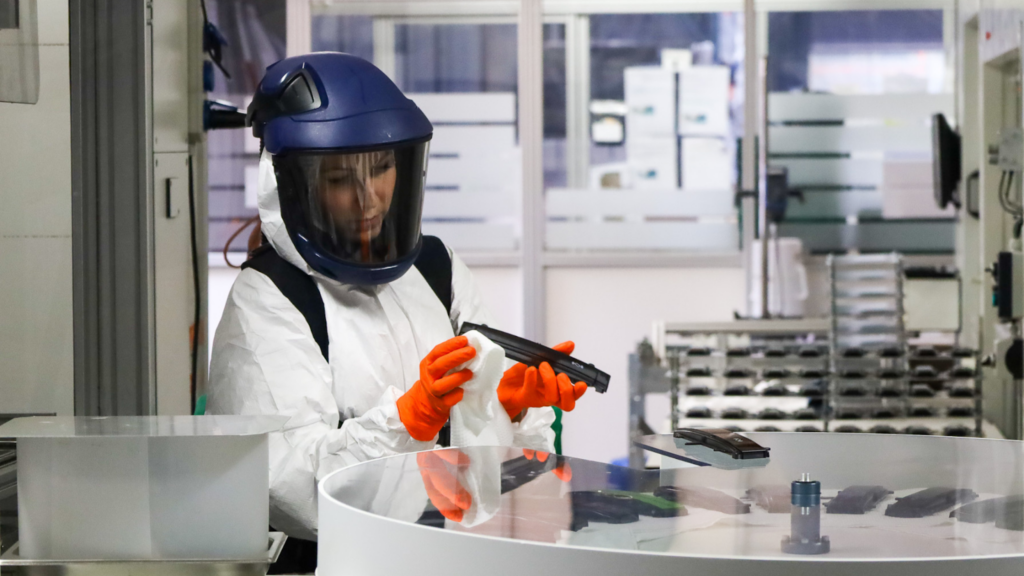
Image 2

Did you know: Our cleanroom at Zweko Optics controls every single detail?

  • Dust-free start: every part is carefully cleaned.
  • Smart coating: we apply techniques such as spin, dip, flow, and spray coating.
  • Perfect curing: with ovens or UV lamps, we apply both renowned industrial coatings (such as Momentive) and our own ViewTec™ coatings.
  • Strict quality checks: adhesion, optics, and functionality are always verified before packaging.
  • And the best part? Thanks to automation, we can coat series ranging from hundreds to tens of thousands of pieces. Efficient, reliable, and fully customized.

Conclusion

In high-risk environments, the right visor or glazing can mean the difference between vulnerability and protection. Zweko delivers proven optical solutions that safeguard both personnel and equipment, while maintaining maximum visibility. With Zweko Optics, you gain a partner fully committed to mission success.

Transparent thermoplastic sheet materials: the smart alternative to glass. 

Transparent thermoplastic sheet materials: the smart alternative to glass. 

Why polycarbonate, PMMA, PETG and other thermoplastics often perform better than glass. Lighter, more impact-resistant and more energy-efficient.

When considering transparent materials for glazing or protection, glass is often the first choice. However, transparent thermoplastic sheets offer clear advantages in many applications. 

At Zweko Optics, we work with high-quality plastics such as polycarbonate (PC), polymethyl methacrylate (PMMA), PETG, SAN and APET on a daily basis to create solutions for visors, protective screens and optical components. 

But which material is best suited to your application? We compare the properties of glass and thermoplastics for you. Discover why plastics are often a smarter alternative.

Is glass or plastic better for my application?

Glass is known for its hardness, scratch resistance and chemical stability, making it a good choice for architecture and outdoor applications. What is the disadvantage of glass? It is heavy, fragile and difficult to work with. Thermoplastics, on the other hand, are lighter, more impact-resistant and easier to shape or process. 

Figure 1. Stress/strain curves for glass (left) and polycarbonate (right).

Polycarbonate (PC) is known for its unrivalled impact resistance and is often used in safety glazing and visors. PMMA, better known as acrylic (or under the brand name Plexiglas®), excels in clarity and gloss, making it ideal for applications where optical quality is paramount. PETG combines clarity with chemical resistance and is often chosen in medical or industrial environments where regular cleaning and disinfection are required. Materials such as SAN and APET also have specific advantages, from lightweight industrial windows to moisture-resistant solutions for refrigerated display cases.

What are the advantages of SAN in sectional doors?

Styrene Acrylonitrile, better known as SAN, is a thermoplastic that stands out for its high rigidity combined with low weight. These properties make it particularly suitable for windows in sectional doors. 

Thanks to its transparency, SAN creates a sleek, modern look. Its light weight also means that the door construction is subjected to less stress than with glass, resulting in less wear and tear on the motor and hinges and increasing the service life of the system. 

In addition, SAN is highly resistant to temperature fluctuations and retains its dimensional stability, which contributes to the durability of sectional door applications. This makes it a smart alternative to glass that offers both aesthetic and practical advantages.  

What is the best material for visors?

One of the most frequently asked questions is: ‘What is the best material for visors or protective goggles?’

1 | Polycarbonate for personal protective equipment

Polycarbonate (PC) is the number one choice for visors thanks to its extremely high impact resistance. It can absorb hard impacts without breaking, making it ideal for helmets, face protection and safety glasses.

2 | Acrylic for optical quality

PMMA (acrylic) offers the highest light transmission and a luxurious shine, but is less impact resistant. It is often chosen for applications where optical quality is more important than impact resistance.

3 | PETG for chemical resistance

PETG is strong, clear and chemically resistant. It is also easy to mould, which is useful in medical or industrial environments where regular cleaning is required.

Why choose thermoplastics over glass?

Those who prioritise safety, weight and flexibility usually opt for thermoplastics. They are about half the weight of glass and can be processed at much lower temperatures, which makes production easier and more energy efficient.

Glass is simply not an option for visors: it would be too heavy and too fragile to guarantee comfort and safety. Plastics such as polycarbonate, on the other hand, offer the necessary protection and comfort of use. 

At Zweko Optics, we can further improve these materials with our in-house coatings that provide scratch resistance, UV protection and extra durability.

How do you choose the right material?

The choice of the right thermoplastic sheet material depends on three important selection criteria: density, toughness and processing temperature. Glass has a density of approximately 2.5 g/cm³, more than twice as heavy as most thermoplastics, which are around 1.2 g/cm³. 

For applications where weight is a factor, such as in vehicles, cabins or portable protective equipment, plastic is therefore often the better choice. Thermoplastics also score better in terms of toughness. Polycarbonate can withstand much higher impacts than glass, which means it can even be used for burglar-proof or bullet-proof applications. 

Finally, processing temperature plays a role. Glass requires temperatures above 500°C to be formed, while thermoplastics can be processed at much lower temperatures. This saves energy and makes production more efficient and flexible.

Figure 2. Values of standard transparent thermoplastic materials

Source: Vegt, van der, A. K., & Govaert, L. E. (2003). Polymers: from chain to plastic
* Chemical resistance on pure material, without coating and compared to glass on acids, alkalis and organic solvents.
** Outdoor resistance on pure material, without coating or co-extruded cover layers and compared to glass
1) Extruded sheet of PMMA
2) Cast sheet of PMMA
Young’s modulus, tensile strength and elongation at break measured according to ISO 527
Notch impact measured according to ISO 180/1A
LOI = oxygen limit index according to ASTM D2863
Pencil hardness measured according to ASTM D3363

How does Zweko enhance the performance of thermoplastics?

In addition to the basic performance of the material, at Zweko Optics we can further improve its properties by applying in-house ViewTec coatings. These coatings increase scratch resistance, improve chemical resistance and offer UV protection. As a result, transparent thermoplastic sheets last longer and perform even better in demanding conditions, such as outdoor use or intensive cleaning.

Costs and the environment: are thermoplastics a more sustainable alternative?

At first glance, glass appears to be cheaper per kilogram than plastics, but when you look at the total life cycle, thermoplastics are often more cost-efficient. Their lower weight allows for lighter constructions and easier installation. Production is more energy-efficient thanks to lower processing temperatures. 

Due to their higher impact resistance and longer service life, thermoplastics need to be replaced less often. In addition, recycling plastics requires less energy than recycling glass, which reduces the environmental impact.

Conclusion: which material is right for your project?

Transparent thermoplastic sheets such as polycarbonate, PMMA and PETG are versatile and cost-effective alternatives to glass. Their light weight, impact resistance and ease of processing make them the ideal choice for visors, safety glazing and optical applications.

If you are wondering, ‘Which material is best for my visor or protective application?’, the answer is clear: thermoplastics combine safety, performance and flexibility in a way that glass can never match.

With Zweko Optics’ expertise in coatings and processing, we go one step further and create materials that really make a difference.

Curious about which material best suits your project? Contact our specialists; we are happy to help you find the right solution.

Ready for the new season: how Zweko Optics refurbishes windows in temporary structures with full-service support

Ready for the new season: how Zweko Optics refurbishes windows in temporary structures with full-service support

As festival season, trade shows, and large outdoor events approach, organisers and rental companies can’t afford to cut corners. Temporary structures like event tents, demountable halls, and pavilions need to be more than just functional and safe. They also need to look clean, modern, and professional.

Windows play a bigger role in this than many people think. They bring in light, create an open feel, and give the structure a polished look. But after years of exposure to weather, transport, and repeated installation, polycarbonate windows can become scratched, dull, or even cracked.

Helping a long-time client prepare for the busy season

That’s exactly what happened to one of our trusted clients, a company specialised in temporary event structures. Their aluminium frameworks were still in great shape, but the windows had clearly seen better days. Together, we tackled the entire renovation from A to Z, so they’re now fully prepared for a packed season of events.

One partner, one point of contact: total peace of mind

At Zweko Optics, we believe replacing or upgrading windows shouldn’t be a hassle. That’s why we manage the process entirely in-house, coordinating every step and making life easier for our customers. Here’s how we work:

1. New, high-quality polycarbonate windows with premium coatings

We start by producing new polycarbonate panels, coated in-house with our ViewTec hardcoat. This advanced coating is scratch-resistant, chemical-resistant, and easy to clean, ensuring years of clear visibility, even under heavy use.

2. Fully customised and ready-to-install

Every window is cut to size, with top and bottom strips already applied. That means each panel fits perfectly into the existing aluminium frame. This is to make sure no on-site improvisation is needed.

3. Professional removal and installation

We carefully dismantle the old panels without damaging the frame and replace them with the new coated windows. The result? A refreshed structure that looks like new and performs even better.

4. Smart planning to minimise downtime

We plan the work around the client’s event schedule, so the structure is offline for as little time as possible. That means fewer disruptions and lower costs.

Why polycarbonate instead of glass?

Polycarbonate is the smart choice for temporary buildings and tent structures. Compared to glass, it offers clear advantages:

  • Up to 250 times stronger than glass and virtually unbreakable. Ideal for transport, assembly, and disassembly.
  • Lighter than glass, which makes handling and installation easier and faster.
  • With our coating, the surface stays clear, scratch-resistant, and easy to maintain, extending the lifespan of your investment.

Want to learn more about the benefits of polycarbonate? Check out our blog: Revolutionizing temporary structures: the rise of Polycarbonate panels

Event tents ready for many more seasons

Thanks to our full-service solution, our client now enters the new season with confidence. Their structures look as good as new, stand up to heavy use, and are easier to maintain than ever.

We’re proud to be a flexible, hands-on partner and an extension of our customer’s own team. The result? A happy client, and high-performance structures that are ready for many seasons to come.

Thinking about upgrading your windows?

Whether you need new windows, custom plastic components, or high-performance ViewTec coatings, Zweko Optics is here to help. For us, peace of mind isn’t a promise, it’s our way of working.

Get in touch today and let’s make sure your temporary structures are ready for many successful seasons ahead.

From idea to perfect visor: How prototypes make the difference at Zweko

From idea to perfect visor: How prototypes make the difference at Zweko

At Zweko Optics, everything revolves around precision, collaboration, and innovation. Developing a visor is a process where every millimeter counts. That’s why, when working on new designs, we focus heavily on prototyping, we don’t just jump from drawing to production. Instead, we follow a carefully planned process that starts with a digital model and ends with a perfectly fitting visor made from the right material, completely tailored to the wishes of our customer.

Collaboration from the first design


When a customer approaches us with an idea or a technical drawing of a visor, we see that as the starting point of an intensive collaboration. Rather than blindly following the plans, we examine everything thoroughly and with a critical eye. Thanks to the expertise of our R&D team, we think along about potential improvements: Can the design be more compact? Is the mounting sufficiently robust? Are all the cutouts correctly placed?

We strongly believe in this collaboration, because the better the preparation, the stronger the end product.

The visor: More than just a functional component


A visor is much more than just protection or functionality. It largely defines the appearance of the helmet, whether it’s a sporty look, a rugged safety helmet, or an ergonomic design for industrial use. The shape, fit, and finish of the visor are crucial for both aesthetics and compatibility.

That’s why we use our unique forming technology at Zweko. It enables us to produce even complexly shaped visors that fit seamlessly onto the helmet. Whether it’s round shapes, sharp angles, or specific fittings: we ensure that the visor not only fits but also forms a visual unity with the helmet.

2


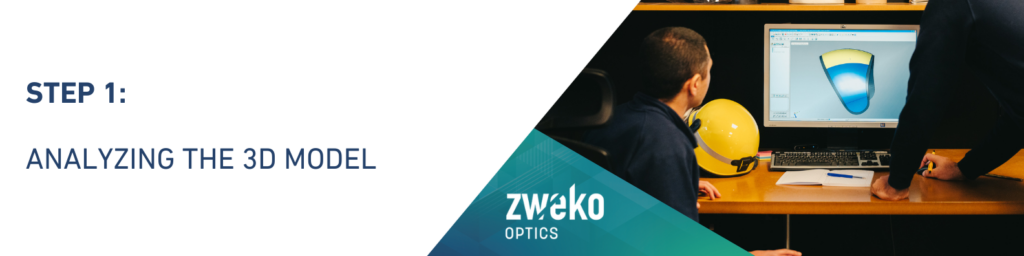
The first step in our prototyping process is digitally analyzing the 3D model. We examine the design in detail on the computer and check whether everything is technically feasible. If necessary, we propose improvements or adjustments so the design fits the intended use and production capabilities perfectly.

Once the digital model is ready and approved, we produce a 3D-printed prototype. This tangible model gives our team the opportunity to evaluate the design in real life. We can check if the visor fits correctly, if it is ergonomic, and if the design meets expectations. The big advantage of this step? Any errors are detected before the visor is made in its final form, avoiding unnecessary costs.

A 3D print is simply much more powerful than a drawing: it’s tangible, realistic, and allows for quick decision-making.

Once the 3D-printed prototype is approved, we begin the next phase: the visor is produced in the material of the customer’s choice. Here, we take into account the technical properties, applications, and durability requirements of the product. Thanks to the preceding process, we can confidently create the first samples, knowing the design is spot-on.

Again, we maintain close consultation with the customer to ensure the final result fully meets expectations.

Efficient, fast, and cost-saving prototyping for visors


Our entire prototyping process, from design review to producing the first samples, is typically completed within four weeks. That’s fast, but without compromising on quality or precision. Our approach prevents errors, avoids waste of materials and time, and ensures that the visor is correct from the very first series.

Conclusion: The power of a good prototype for visors

At Zweko, it’s about more than just manufacturing, we’re building quality together. Thanks to our structured prototyping process with digital modeling, 3D printing, and precise follow-up, we deliver visors that are perfect down to the smallest detail. Each prototype is a step closer to a flawless final product and an investment in efficiency and customer satisfaction.

Zweko Optics. From digital idea to perfect visor, exactly the way you want it.

Why high-quality visors are essential for PPE – And why Zweko Optics is the right choice

Why high-quality visors are essential for PPE – And why Zweko Optics is the right choice

In industries such as chemical processing, metalworking, healthcare, and firefighting, personal protective equipment (PPE) is crucial for ensuring worker safety and well-being. A key component of PPE is facial protection, where visors play a vital role. These visors not only shield against flying debris, chemical splashes, and extreme temperatures but also protect against additional hazards like vapor buildup and wear over time.

At Zweko Optics, we specialize in manufacturing custom visors, with or without coatings, for various PPE suppliers. Our products are used across multiple industries, providing tailor-made solutions that meet the most stringent safety standards.

The importance of high-quality visors in PPE

Visors are more than just a protective barrier; they are an integral part of daily operations for professionals working in high-risk environments. To be truly effective, visors must offer a combination of safety, durability, and ease of use.

  • Protection against physical hazards: Visors safeguard the face from flying particles, chemical splashes, and heat exposure. Without this essential protection, workers are at significant risk of serious injury.
  • Clear visibility: In high-risk situations where quick decision-making is critical, an unobstructed view is essential. Scratches or fogging on a visor can impair visibility and lead to unsafe conditions.
  • Durability and reliability: A visor that withstands wear and chemical exposure not only ensures long-lasting protection but also provides a cost-effective solution over time.

Coatings That Make a Difference

To meet the unique demands of different industries, our visors can be enhanced with specialized coatings. These advanced technologies significantly improve visor functionality and performance:

  • Anti-scratch coating: Our abrasion-resistant coating ensures that visors remain clear and durable, even after extensive use, extending their lifespan and maintaining optimal visibility.
  • Anti-fog coating: Fogging is a common issue, particularly in warm or humid conditions. Our anti-fog coatings prevent condensation buildup, ensuring professionals always have a clear line of sight, regardless of their environment.
  • Chemical-resistant coating: In industries such as chemical manufacturing, visors are frequently exposed to aggressive substances. Our coatings offer superior resistance against chemical degradation, guaranteeing consistent protection.

Premium-quality materials

At Zweko Optics, we use only high-quality materials that comply with the strictest safety regulations. One example is PPSU (Polyphenylsulfone), a material known for its outstanding heat resistance and durability. PPSU visors are ideal for demanding applications such as firefighting, where extreme temperatures pose a constant challenge.

Custom solutions for various industries 

One of our key strengths is our flexibility in customization. We manufacture visors in various shapes and sizes, tailored to the exact specifications of our clients. Whether for respiratory masks, protective helmets, or specialized applications, our solutions are designed to meet the unique demands of each sector.

Additionally, we collaborate with leading PPE suppliers whose industries include:

  • Healthcare: Visors for medical professionals offering protection against infectious agents.
  • Chemical industry: Chemically resistant visors for laboratories and production environments.
  • Firefighting: Heat-resistant visors made from durable materials like PPSU.
  • Industrial manufacturing: Highly scratch-resistant visors designed for use in harsh conditions.

Why choose Zweko Optics? 

With over 30 years of expertise in plastics processing and advanced coating technologies, Zweko Optics delivers products that meet the highest quality standards. Our in-house coating line allows us to maintain full control over production, ensuring fast delivery times and consistent quality.

We recognize that every application is unique. That’s why we work closely with our clients to develop custom visors that align perfectly with their specific needs. Our visors are not just functional. They are durable, cost-efficient, and designed to provide maximum protection.

Conclusion 

Selecting the right visors is essential for ensuring worker safety and efficiency in hazardous environments. At Zweko Optics, we provide top-tier, custom-made solutions with innovative coatings that make a real difference. By investing in our visors, you’re investing in the protection and well-being of your workforce, and securing a safer future for your business.

Want to learn more about what we can do for your organization? Contact us today and explore the possibilities.

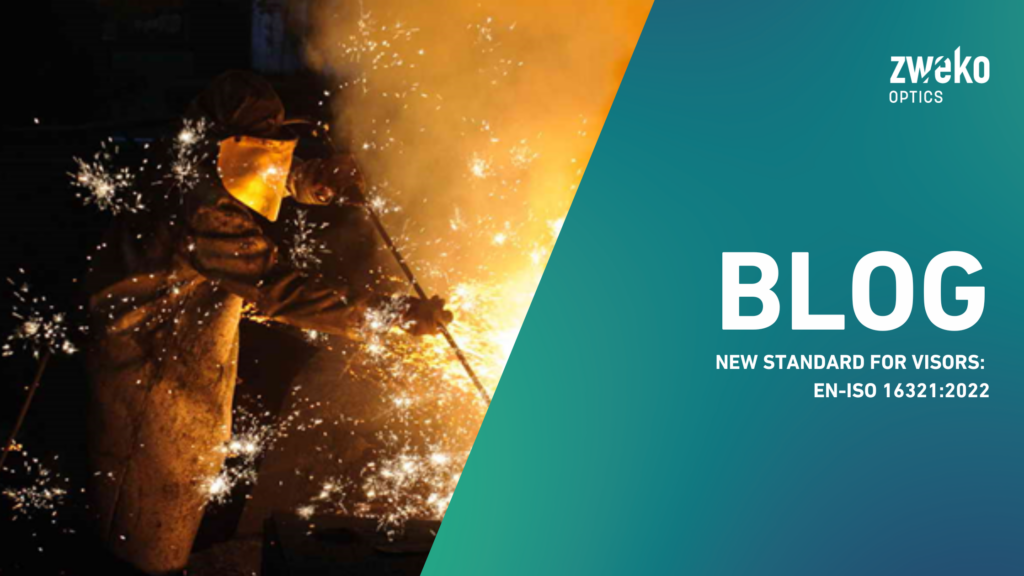
New Standard for Visors: EN-ISO 16321:2022

27 kopie 2

At Zweko Optics, we closely monitor changes in regulations and standards, especially those affecting the safety and performance of our products, which officially came into effect on November 11th, 2024.

What does this mean?

EN 166 states the basic properties that all eye protection products must meet. This standard is closely linked to EN 167:2001 and EN 168:2001, which specify optical and non-optical test methods. These norms stay into place. The EN-ISO 16321:2022 is a norm linked to protective eyewear used eye and face protectors. These protectors are intended to provide protection for the eyes and faces of persons against one or more common occupational hazards such as impacts from flying particles and fragments, optical radiation, dusts, splashing liquids, molten metals, heat, flame, hot solids, harmful gases, vapours and aerosols.

What does this mean for Zweko Optics? 

As a manufacturer of semi-finished products, such as visors and lenses integrated into helmets, we do not certify our products ourselves. This is typically done by our customers. However, we conduct extensive testing in our laboratory to ensure product quality and consistency, making this change in standards highly relevant to us.

Key changes between EN166 and EN-ISO 16321:2022

Several technical adjustments have been made in testing procedures, particularly for anti-fog (N-mark) and abrasion resistance (K-mark):

  • Anti-fog testing (N-Mark):
    • Previous: Soaking in deionized water for 60-120 minutes at room temperature.
    • New: Soaking for exactly 120 +/- 5 minutes.
    • This change could impact certain products that met EN166 antifog criteria but may no longer comply with EN-ISO 16321:2022.
  • Conditioning time after soaking:
    • Previous: Minimum of 12 hours.
    • New: Between 12 and 24 hours (practically, this means leaving it overnight).
  • Humidity during conditioning:
    • Previous: 50% relative humidity (RH) at 23 +/- 5°C.
    • New: 30-80% RH, allowing for a broader range.
  • Abrasion resistance testing (K-Mark):
    • Previous: Light transmission loss of <5 cd/m2-lx.
    • New: 8% wide-angle scatter measurement.

Our test result

Given the changes in the standard, we re-tested our products for anti-fog performance. Our three anti-fog solutions are ViewTec FRX, ViewTec FRC, and ViewTec FRD. Since ViewTec FRX did not meet EN166 anti-fog requirements, we focused on testing ViewTec FRC and ViewTec FRD.

Image

Conclusion

Our tests confirm that both ViewTec FRC and ViewTec FRD continue to meet the anti-fog requirements of the new EN-ISO 16321:2022 standard. This reaffirms Zweko Optics’ commitment to quality and innovation!

Why Zweko uses PPSU for firefighter visors: the heat-resistant solution

BLOG - Why Zweko uses PPSU for firefighter visors: the heat-resistant solution

With more than two decades of experience, Zweko supplies first-class firefighter visors to Europe’s leading helmet manufacturers. Our expertise and specialised knowledge in producing heat-resistant visors have made us a reliable partner for the most demanding applications. Thanks to the choice of PPSU (Polyphenylsulfone), a thermoplastic that can withstand extreme heat, our visors meet the highest safety standards in the industry.

When it comes to choosing materials for helmet visors, the standard thermoplastic used is usually polycarbonate (PC). Known for its excellent impact resistance, transparency, and stable dimensional performance, polycarbonate seems like a suitable choice for many protective applications. However, when it comes to firefighting, especially in buildings and other structures where temperatures can reach extreme levels, polycarbonate simply doesn’t hold up. 

The eye protection requirements for firefighter helmets are outlined in the EN 14458:2018 standard, which includes the EN 443:2008 regulation. This particular norm specifies the requirements for helmets used in firefighting scenarios where exposure to extreme heat is a common risk. A critical part of the EN 443:2008 standard is the “radiant heat test,” where helmets must endure temperatures of up to 1000°C for 10 seconds. While polycarbonate has a high heat resistance, it falls short under these extreme conditions, necessitating the use of more advanced materials.

Tabel - Level of requirements/protection:
Level of requirements/protection:
high: +++ / medium: ++ / low: + / not applicable: –

The limitations of polycarbonate in extreme heat

Despite its many benefits, polycarbonate is not suitable for applications that involve exposure to very high temperatures. During the radiant heat test, polycarbonate visors can fail because they are not designed to withstand such intense heat. Manufacturers have tried various strategies to overcome this limitation, such as applying a heat shield through Physical Vapor Deposition (PVD). While this can improve heat resistance, it adds complexity to the manufacturing process and increases costs. Additionally, the PVD coating can reduce light transmission, which is not ideal for visors where clarity is crucial.

The shift to higher heat-resistant thermoplastics

To address the shortcomings of polycarbonate in firefighting applications, materials with higher heat resistance have been explored. Options include high-heat polycarbonate (HH PC), Polyether Sulfone (PESU), and Polyphenyl Sulfone (PPSU). These materials offer improved heat resistance, making them more suitable for use in environments where extreme temperatures are a factor. However, HH PC and PESU are primarily used for injection molding and are not available as extruded sheet materials, which limits their versatility in visor production.

Scherm­afbeelding 2024 11 11 om 09.53.31 1
According to the new standard, NFPA, there is indeed an abrasion resistance criteria included that
would require a hard coat.

Why PPSU is the ideal choice for firefighter visors

Zweko has opted for PPSU (Polyphenyl Sulfone) as the preferred material for firefighter visors, and for good reasons. Unlike other high-heat-resistant materials, PPSU is available as an extruded sheet, making it suitable for thermoforming into complex shapes. At Zweko, we utilize our proprietary thermoformable abrasion-resistant coatings and specialized thermoforming techniques to produce visors that comply with EN 14458:2018. For over 20 years, we have supplied Europe’s leading helmet manufacturers with premium visors made from PPSU.

The process of coating and thermoforming PPSU is complex, requiring thermoforming temperatures around 275°C. At these temperatures, the bond between the coating and substrate must be exceptionally strong, and the cured coating must also withstand the radiant heat test. Additionally, the high processing temperatures can place significant stress on equipment like molds and ovens, demanding specialized solutions to maintain the integrity of the machinery.

Zweko’s expertise in PPSU thermoforming and coating

Thanks to our experienced engineering team, Zweko has developed unique methods to overcome the challenges associated with coating and thermoforming PPSU. Our solutions ensure that customers receive a premium-quality visor at a competitive price, without compromising on safety or performance. The result is a visor that not only meets regulatory standards but also offers long-lasting durability and heat resistance under the most demanding conditions.

For those interested in learning more about the chemistry behind our thermoformable hard coating, we invite you to read our ViewTec blog via https://www.viewtec.be/en/viewtec-frd-coating/

Firefighters operate in some of the most extreme environments, and their protective gear needs to meet the highest safety standards. While polycarbonate may be a go-to material for many applications, it does not offer the heat resistance required for firefighting helmets. PPSU, on the other hand, is a thermoplastic that can handle the heat, literally. With over two decades of experience in producing premium PPSU visors, Zweko continues to be a trusted partner for Europe’s top helmet manufacturers, delivering products that perform when it matters most.

Energy saving in production: how we minimize our carbon footprint

Energy saving in production: how we minimize our carbon footprint

Energy management in production is an important focal point for our company. It is our responsibility to minimize our ecological impact while producing cost-efficiently. In this way, we guarantee optimal value for money for our customers. But how do we achieve this in practice?

Monitoring large energy consumers

We use online monitoring to monitor the energy consumption of heavy installations such as compressors, air conditioning units, ovens and our paint shop. This data analysis allows us to set up targeted energy projects. For instance, we are currently improving the control of the UV lamps in our coating plant.

In addition, this monitoring helps us detect anomalies quickly. A few months ago, for example, we discovered a defect in a compressor that led to a slumber power consumption that was three times higher than normal. Thanks to our monitoring, we were able to resolve this quickly, which prevented a potential slumber consumption of 35 MWh per year.

energy monitoring graph

More than 1,000 solar panels on our roof

Our production and warehouse roof is equipped with more than 1,000 solar panels. The energy generated meets a significant proportion of our total energy needs. As a result, the vast majority of our energy supply comes from renewable and nuclear sources, contributing to more sustainable production.

Advanced air-conditioning unit for the Paint Line

To ensure quality in our coating line, we have a state-of-the-art air conditioning unit. This air-conditioning unit is equipped with a heat pump, allowing us to cool and heat in a very efficient way. Moreover, the unit is equipped with a heat wheel, which allows us to use the extracted air to pre-cool or heat the intake air. This system not only increases efficiency but also significantly reduces energy consumption.

UV-curable coatings: efficiency at its best

What is unique about our approach is that we use proprietary formulated UV-curable coatings that require low curing energy. This cuts both ways: we reduce energy consumption and increase the efficiency of the curing process. Others still work with thermal systems, and thus gas-fired ovens, which is less efficient and less environmentally friendly. The cooling of our UV lamps is even used to heat the process air at cold outside temperatures, which leads to optimal energy use.

By investing in energy-efficient technologies and processes, we are making great strides in minimizing our environmental footprint. From monitoring large energy consumers to usingsolar panels and developing proprietary UV coatings, every action contributes to more sustainable and cost-efficient production. This way, we continue to offer our customers the best value for money, while treating our planet responsibly.

Want to know more about our sustainable initiatives or how we can help your business with high-quality, eco-friendly coatings? Then get in touch with us.

How Zweko’s expertise in visors benefits plastic machining

13

How Zweko’s expertise in visors benefits plastic machining

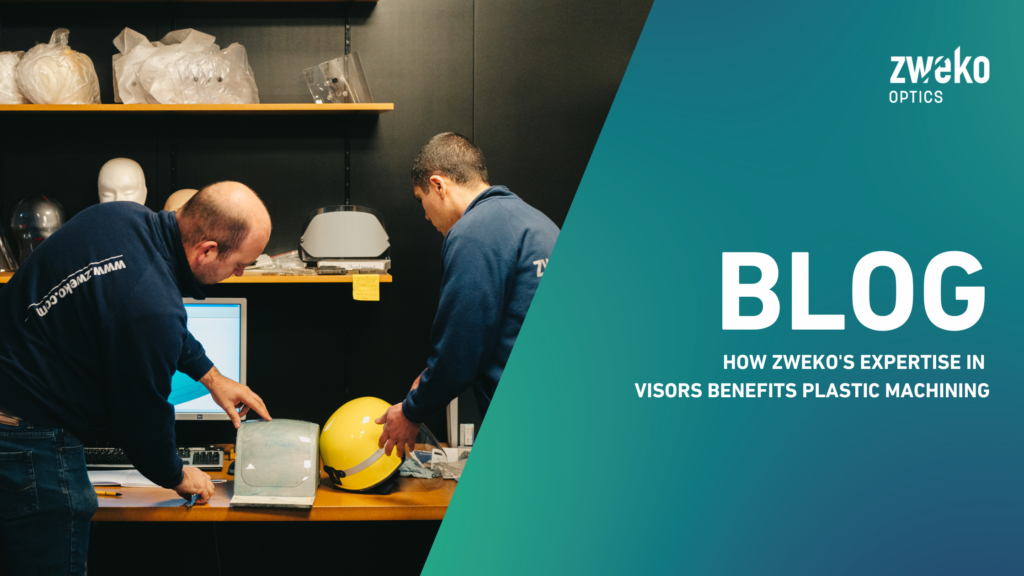
At Zweko Optics, we have been producing visors for  the leading European helmet manufacturers for more than 30 years. Over the years, we have brought our in-depth knowledge and expertise to the wider plastics industry. Our history gives us some great advantages that allow us to realize added value for our customers. Here are some of the key benefits we offer, or how Zweko’s expertise in visors benefits plastic machining:

Skilled production engineers

Our production engineers are always thinking along with our customers. Where possible, we help optimize material selection and design to ensure optimal production speed and efficient material use. This cooperation ensures that your plastic parts are not only of high quality, but also produced cost-efficiently.

Flexible production methods and rapid prototyping

With a stock of diverse materials and flexible production methods, we can produce samples quickly. This means we are able to respond quickly to your needs and provide you with prototypes that accurately follow your specifications.

Advanced multi-spindle milling machines

We have several multi-spindle milling machines that allow us to machine flat sheets very efficiently. These machines enable us to work with high precision and speed, resulting in shorter lead times and lower production costs for our customers.

Dedicated employees and quality systems

Our employees are dedicated to delivering high-quality products, whether optical quality or dimensional accuracy. This applies to every step in the production process, from milling and assembly to packaging. We operate an ISO quality system where we carry out and record sampling during production and final inspection. This ensures that every product that leaves our facility meets the highest standards.

High delivery reliability

Visorsare often ordered on the basis of tenders. Thanks to our efficient production processes and extensive experience, we are able to produce large series at short notice with high delivery reliability. This makes us a reliable partner for your production needs.

Applications in various sectors

Our expertise and capabilities make us the ideal partner for series production of plastic parts in a wide variety of sectors, including vehicles, helmets, machine parts, glazing panels, advertising (sign & graphic), gadgets, and more.

At Zweko Optics, we are proud of our history and commitment to quality and innovation. Our experience in visor manufacturing has enabled us to provide valuable benefits in the wider plastics industry, and we look forward to helping you with your next project.

Revolutionizing temporary structures: the rise of polycarbonate panels

8

Revolutionizing temporary structures: the rise of polycarbonate panels

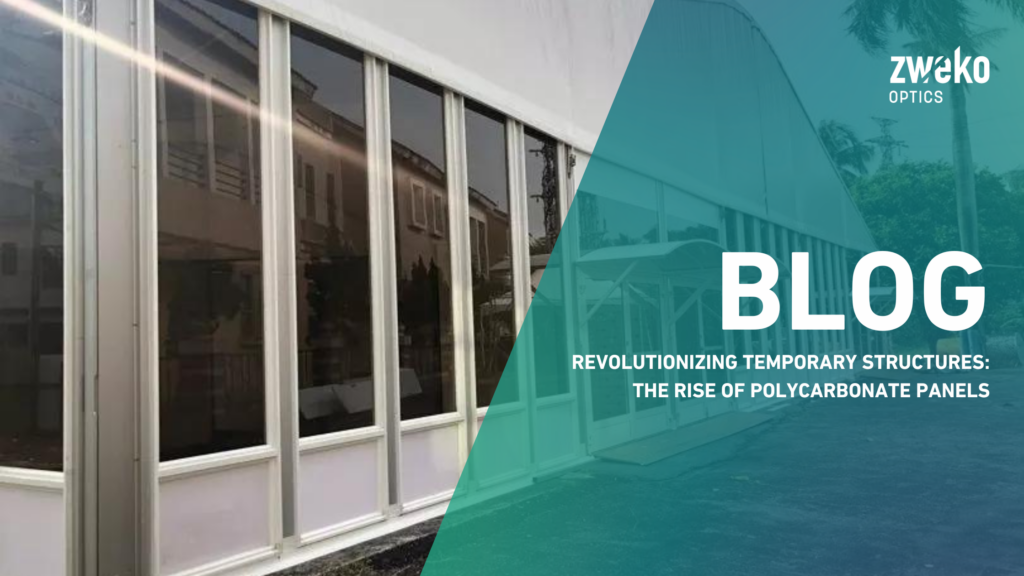
In the competitive realm of temporary structures, innovation is key to staying ahead. One international leader in the industry faced a unique challenge with their glass wall panels. These panels, essential components of their structures, posed logistical hurdles due to their weight and fragility. Zweko was able to help provide a solution for them.

The challenge: heavy glass panels

The glass wall panels utilized by the company were sturdy but cumbersome. Made from glass sheets with aluminum frames, they were twice as dense as polycarbonate, making them a logistical nightmare. Frequent assembly, disassembly, and transportation only exacerbated the issue, resulting in high costs and operational inefficiencies.

The solution: enter polycarbonate

Seeking to improve ergonomics and efficiency, the company explored alternatives. While a switch to polycarbonate seemed promising, concerns about cost initially hindered the transition. However, a comprehensive redesign of the panel unveiled a game-changing revelation: the aluminum frame, designed to support heavy glass, was unnecessary for polycarbonate. This realization paved the way for a lighter, more streamlined design, significantly reducing transport volume and warehousing needs.

The benefits: cost savings across the board

The advantages of polycarbonate extended far beyond weight reduction. With its exceptional impact resistance, 250 times higher than standard float glass, the need for replacements drastically decreased. Urgent backorders became a thing of the past, as the durability of polycarbonate panels ensure longevity and reliability.

Cost analysis: making the case for polycarbonate

Despite initial concerns about cost, a thorough evaluation revealed significant savings across multiple fronts:

  • Transport weight and volume: Reduced, leading to lower transportation costs.
  • Aluminum profiles: Less material required, resulting in cost savings.
  • Replacements: Drastically reduced due to polycarbonate’s durability.
  • Urgent backorders: Virtually eliminated, minimizing downtime and disruptions.

Beyond temporary structures: a world of possibilities

The benefits of polycarbonate panels transcend the realm of temporary structures. From public transportation and bus shelters to industrial windows and retail displays, the versatility of polycarbonate offers cost-effective solutions across various applications. Zweko Optics, a leading provider of polycarbonate solutions, stands at the forefront, offering a comprehensive range of services to meet diverse needs.

Conclusion: rethinking glazing solutions

The success story of transitioning from glass to polycarbonate panels underscores the power of innovation in driving efficiency and cost savings. By reimagining traditional approaches, companies can unlock new possibilities and gain a competitive edge in their respective industries. As the demand for durable, cost-effective solutions continues to rise, polycarbonate emerges as a game-changer, reshaping the future of temporary structures and beyond.

In conclusion, the journey from glass to polycarbonate represents more than just a material switch—it’s a testament to the transformative potential of innovation in addressing industry challenges and driving progress.

  • 1
  • 2