


Thermoforming versus Injection Moulding
Comparison of Manufacturing Technologies: Thermoforming vs injection moulding
The use of thermoforming and injection moulding are both common manufacturing technologies in the manufacture of plastic products. Thermoforming involves heating a plastic sheet until the material becomes pliable to then shape it on a mould, while injection moulding assumes plastic granules (pellets). These granules are heated to melting temperatures and then injected into a mould under pressure.
What are the advantages of Thermoforming?
With thermoforming, start-up costs are lower than with injection moulding, as the cost of a mould is much lower than that of a die. Moreover, the mould is relatively easy to adjust, so the design can still be optimised during the design process. Applying a thermoformable hard coating is more efficient on a flat sheet. In addition, plastic sheets of different thicknesses can also be formed on a mould, allowing different variants to be made without incurring start-up costs each time. Thicker parts can also be formed without losing optical quality in the process. Despite starting with a flat plate, we at Zweko Optics can still form complex parts thanks to our unique production process.
For what applications is Injection Moulding used?
Injection moulding only becomes more cost-efficient as quantities increase. The freedom of form in injection moulding is greater, e.g. differences in thickness or sharp corners are possible. However, major adjustments afterwards are not always possible, which means a new mould has to be purchased.
Cases from Zweko Optics
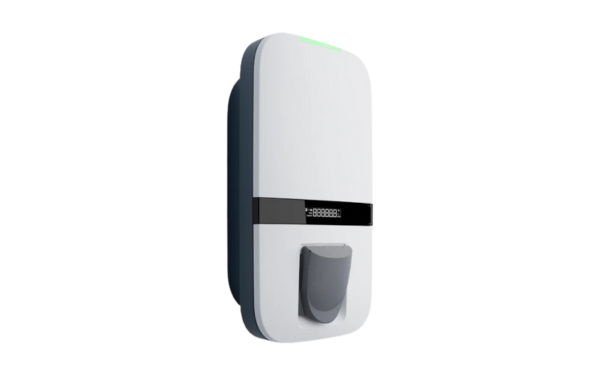
CHARGING STATIONS – INJECTION MOULDING
The display covers for charging stations are produced in large numbers, and there is a thickness difference in the covers. For this reason, it was decided to produce them via injection moulding. Zweko Optics provides these with a hard coating, specifically designed to prevent scratches. This ensures that the quality is maintained, even with intensive use.
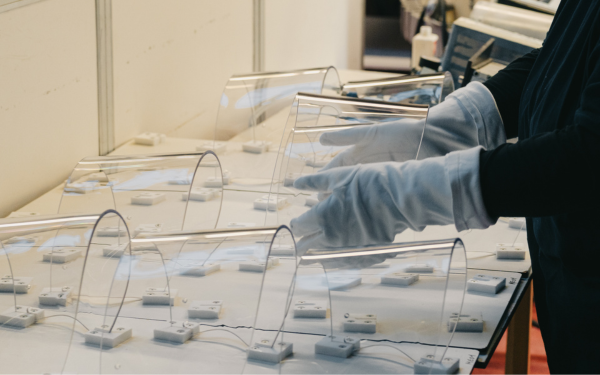
VISORS – THERMOFORMING
The visor we formed has an exceptional shape at the sides. The great deformation is made possible by our unique forming process combined with our flexible thermoformable anti-scratch and anti-fog ViewTec™ coatings. The visor fits closely to the helmet and gas mask, with minimal opening for gas mask clips.